How Much Does a Fishing Charter Cost?
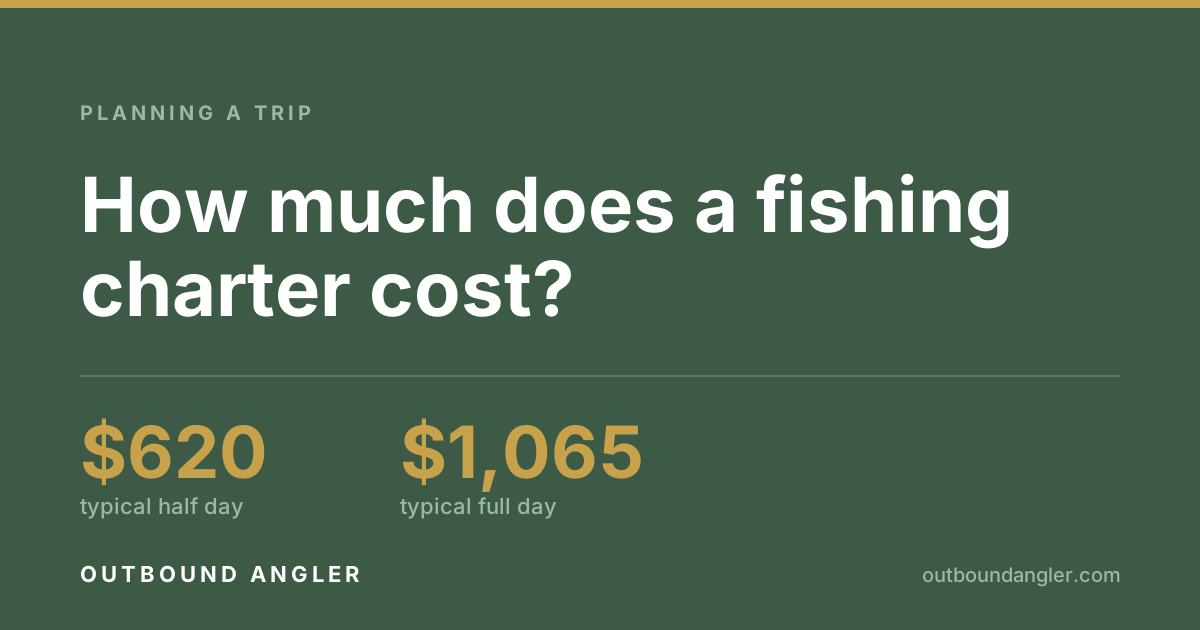
On the guides listed here, a half-day trip averages about $620 and a full day about $1,065. Those are prices for the whole boat, not per person. The spread is wide, and almost all of that difference comes down to how far offshore you're going and how much boat it takes to get there.
Here's what sits behind those numbers, what's usually included, and how to tell whether two quotes are actually comparable.
What a charter typically costs
- Half day (3–5 hours): typically around $620, with most trips between $350 and $900.
- Full day (7–10 hours): typically around $1,065, with most trips between $450 and $1,800.
These are averages across the 519 active guides and charters listed on Outbound Angler, as of October 2026. A handful of trips sit outside those ranges in both directions — offshore runs to the Gulf Stream, overnight tuna trips and multi-day packages go well above, and a short trip in protected water can come in well below.
The price is for the boat, not for your seat
This is the single most common misunderstanding, and it changes the math completely. A $600 half day isn't $600 for you. If four of you go, it's $150 each.
Most guides quote per trip, and listings show the rate that way — "per trip $600" against a four-hour inshore run, for instance. Per-person pricing turns up mainly on larger head boats and party boats, or when a captain is willing to put you together with other anglers to fill the boat. The two aren't comparable until you know which you're looking at, so it's the first thing to pin down.
It also means the number of people you bring matters more than anything else you control. A full day at $1,065 is a serious expense for one angler and a reasonable day out for a group of four.
What drives the price up or down
How far from the dock. This is the big one. An inshore skiff working a marsh or a flat burns little fuel and needs one person aboard. A boat running forty miles offshore for tuna burns hundreds of dollars in fuel before anyone casts, and usually carries a mate. The same eight hours can run anywhere from $450 to $1,800 depending on which side of that line you're on.
Boat size and crew. Bigger boats cost more to run and more to insure. A mate on board is another person being paid.
How long you're out. Not always proportional — a full day often costs less than two half days, because the boat only gets prepped and fueled once.
Region and season. Peak weeks in popular destinations carry peak prices. A guide in the Florida Keys during tarpon season is pricing against heavy demand; the same trip in September is often cheaper and sometimes just as good.
Specialty trips. Poling skiffs for sight fishing, night trips, and anything requiring a specific technical setup tend to price above a general inshore trip.
What's usually included
Most guides include the working essentials, and the trip notes on each listing spell out what that captain covers. Commonly included:
- Rods, reels and terminal tackle
- Bait
- Ice and a cooler for your catch
- Basic fish cleaning and filleting
- In some states and on some boats, the fishing license that covers you for the day
That last one varies a great deal, which is why it gets its own section below.
What's usually extra
- The tip. Budget for it separately. It's customary and it's not in the quoted rate.
- Food and drinks. Nearly always bring your own. Ask whether there's a cooler or whether you need to bring one.
- Extra anglers. Many listings price a trip for two or three people and charge per head beyond that. Check the rate tiers before you add a fourth.
- Fish processing beyond basic filleting. Vacuum packing, freezing and shipping are separate, often through a dockside service rather than the captain.
- Fuel surcharges. Some offshore operations add one when fuel prices spike. Rare inshore, worth asking about offshore.
- Your own license, in some situations.
Does the trip cover your fishing license?
Sometimes, and it depends on where you are and what kind of water you're on.
Many saltwater charter boats operate under a vessel license that covers everyone fishing aboard, and the captain's trip notes will usually say so outright. Guided freshwater trips more often require each angler to hold their own license. Because the rules differ by state and change from year to year, treat the captain's answer as the one that counts and check your state wildlife agency if you want to be certain.
Deposits, cancellations and weather
Most guides take a deposit to hold a date, and most have a written cancellation window. Weather cancellations are normally the captain's call, and a captain who cancels for weather is doing you a favor — a day of being sick in a chop isn't fishing.
Ask about the deposit amount, the cancellation deadline, and what happens if the weather turns, before you send money. Get it in writing, even if that's just an email or a text.
Is a cheap charter a bad sign?
Usually not. A low price often just means a short trip in protected water. A two-hour trip in a sound costs a fraction of a Gulf Stream run because it is a fundamentally different day, not a worse one.
What's worth a second look is a price well below other boats doing the same trip out of the same port. That can mean an older boat, no mate, or gear that's seen better days — none of which is disqualifying, but all of which is worth knowing before you book.
How to compare two quotes
Run both through the same eight questions and the cheaper one often isn't the one you thought:
- Is the rate per trip or per person?
- How many hours, and does running time to the fishing grounds count against them?
- How many anglers does that rate cover, and what does each additional angler cost?
- Are rods, reels, tackle and bait included?
- Is a fishing license covered, or do I need my own?
- What's the deposit, and what's the cancellation window?
- Is fish cleaning included?
- Is there a fuel surcharge?
Working out your own budget
Start from the trip you actually want rather than from a number. Decide whether you're fishing inshore or offshore, how long you want to be out, and how many people are coming. Then look at what guides in that region are charging for that kind of day.
Every listing here shows a price range at the top, each trip's length and rate, and the captain's own notes on what's covered — so you can compare like with like before you pick up the phone. You book direct with the guide; we take no commission and add no booking fee, so the price you see is between you and the captain.
Browse all guides and charters →
Or start from what you want to catch — redfish, tarpon, striped bass — or search by region and water.